In the middle of the ocean, sudden weather changes can cause turbulence and ferocious storms. Under such circumstances, if a large commercial vessel has built-in technology that can be attached to a small boat, an emergency escape for the workers would be possible.
In a worst-case scenario, a rope ladder could be used to climb down, but it is important note that such ladders are prone to swaying and may cause injury.
This article is my take on how marine pilots can prevent possible injuries when moving from boat to the ship using a rope ladder. I have also written about some safety measures for marine pilots and attached some drawings and sketches. Please read them if you are interested.
The main focus of this text will be on marine pilots as they are more likely to be injured on the rope ladders, although ladders are also used by blue collar workers and engineers. I have chosen to focus primarily on marine pilots because they use ladders more than anyone else and are therefore more likely to get hurt.
I have written down my thoughts with the aim of providing helpful insights. While my expertise may not lie in the marine field, I believe that my ideas are worth considering. Therefore please disregard any mistakes and take my ideas if it sounds feasible and whether this can be tried and further the chances of implementing them in the future.
In the sea the crew uses terms such as ‘captain’ and ‘pilot’ with each has distinct responsibilities. You may know more about it than me, however let me tell you my understanding of it. You may be wondering how to accept a proposal from someone who has no knowledge in the marine field. You don’t have to belong to a particular field of expertise to solve a problem. My answer would be it is often difficult to predict the outcome of an idea without first attempting it. If the idea does not yield the desired results, it may be necessary to explore alternative solutions.
Marine Pilot and Captain
There is an old saying in my village “Natives fear the ghost, while strangers fear the unknown depth of water” When the nomads make a long journey, during the sun sets, even if they find a cemetery where they can spend the night, they will lodge up one night without fear and continue their journey the next morning. But if they find a pond to bathe in, despite knowing how to swim well, they will not enter the water due to the fear of the unknown depth and danger. Meanwhile if the nomads has guidance of the native they would get into the water owing to the local knowledge. Nomads would only believe what they see in front of their eyes.
The pond is a familiar place for the natives, they are not afraid of the depth of the water however the cemetery is different because right from the early years they would have heard plenty of ghost stories from the village.
Similarly, a captain is a person who skilfully manoeuvres a ship on the open sea, while a marine pilot is a person who guides a ship into port.
As I understand, I would call a captain as seafarer and marine pilot as native skipper,
What are the possible obstacles a marine pilot may face?
A marine Pilots know the layout of harbour and have detailed knowledge of the forecast, including temperature and the wind speed. He instantly recognise everything. That is, the current state of the sea, the turbulence of the sea, the speed of the wind. He also knows all the possible changes in the weather at any given moment. He also has details of what is the weight of the ship coming into the port? What is the width and length of that ship, and what is the load carrying capacity? Which ships should be docked where, and everything.
However the most accident happens before the marine pilot get on aboard into the ship. The marine pilot goes through unsafe climbing, when he move through the ladder to get on the ship to take control over from the captain. There are two ways to reach the ship. One is by helicopter which is been used in the difficult situations or during the inclement weather conditions. The other one is, the use of a boat called a pilot boat.
A number of marine pilots have had accidents and several times they have crashed into the ship and fallen down into the sea. For example, many marine pilots have crash landed into the side of the boat while climbing the rope ladder, which is often wobbly and sometimes breaks in the middle.
At such times, the marine pilot may fall unconscious into the sea, and the strong currents may pull the marine pilot under the vessel near the propeller, which could endanger his life. It’s not uncommon for a marine pilot to fall from the ladder, especially in windy conditions, the crew on the boat will immediately jump into the sea to save the marine pilot.
However, the injured pilot may have to live with the injuries for the rest of his life.
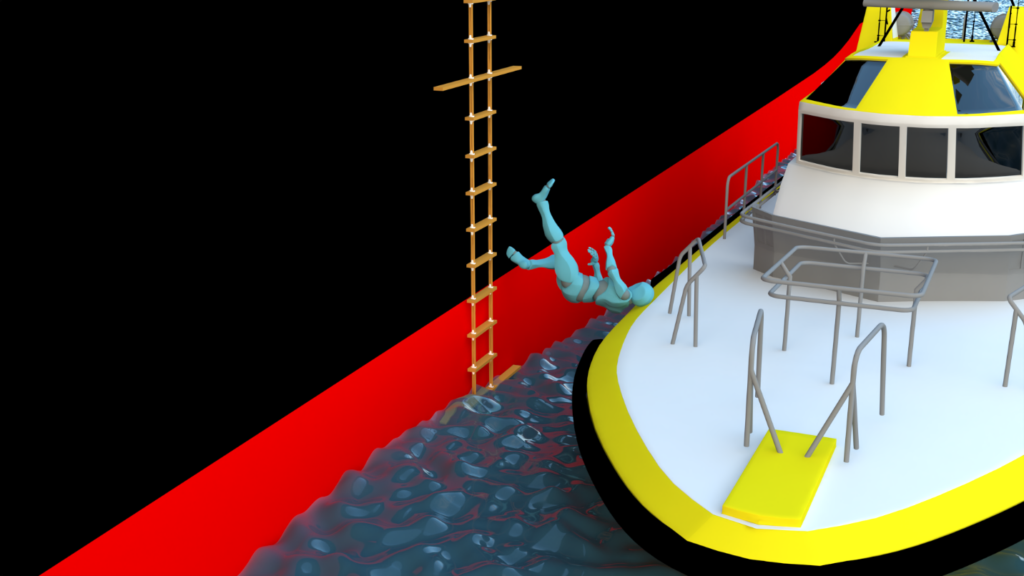
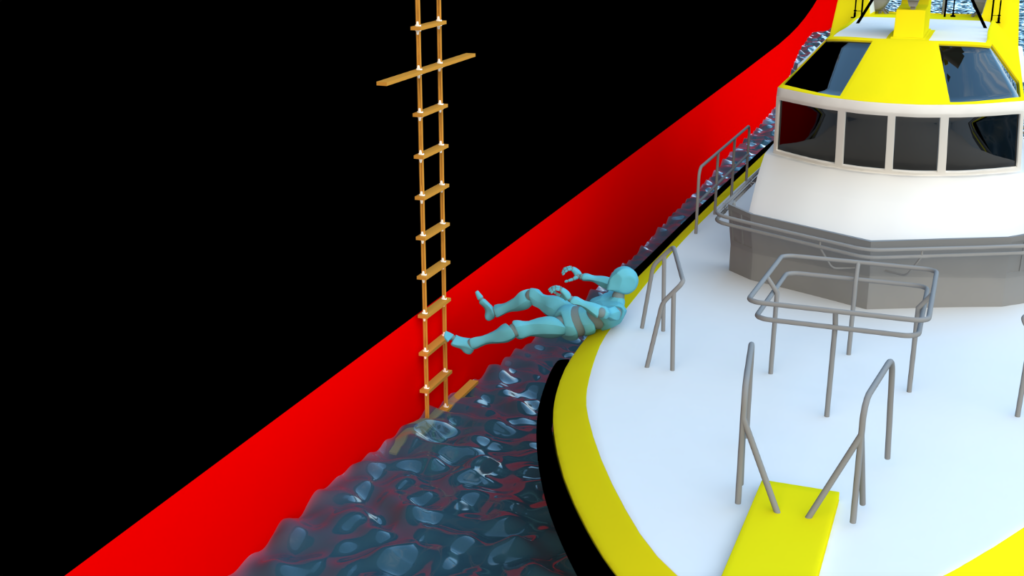
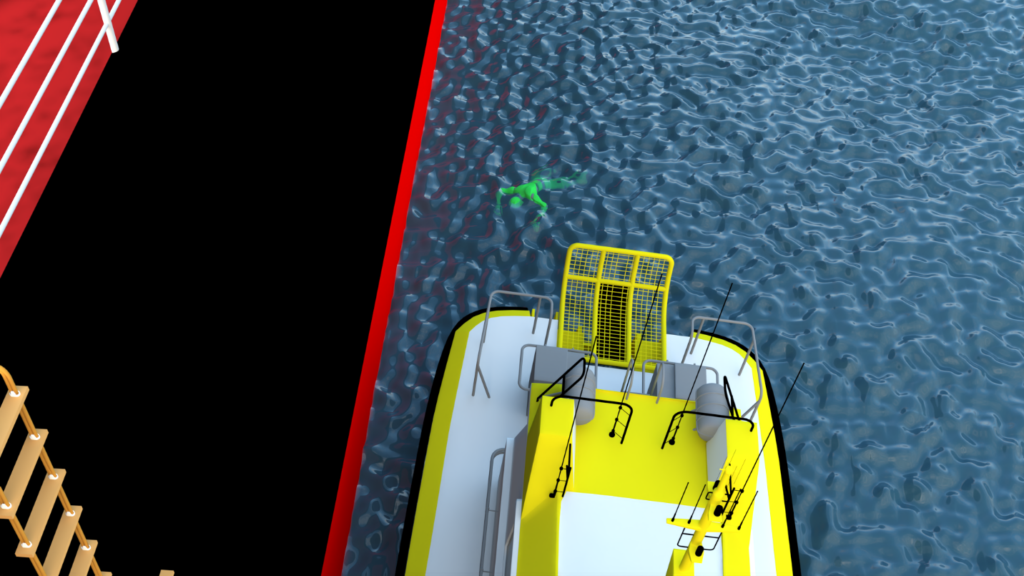
Has the Department of Ocean Development attempted to resolve the issue and prevent such incidents from occurring in the future? Several new methods were tested as part of an experiment, but these were intended for conditions of calm sea.
Despite the many effects in terms of resources, time and material, accidents are still occurring regularly. I think it is possible to find the solution.
“Even before the dawn of world’s religion, two thousand four hundreds years before Tamil ‘Thirukkural’ clearly mentioned”
“Diagnose with care, discover the cause, and
-Thirukkural 948
find and apply the remedy.”
‘Seek the disease and find the mouth of roots, where it breeds’ Which means find the problem and what are the cause and effect of the problem. Then, why does this problem occur?
As I understand it, recognizing the underlying motivation behind the problems, after understanding most of these, one is free of the woes, mainly our interactions and reactions are the answer to any adversity.
Since such accidents can threaten the pilot’s lifestyles, paralyzing his back and probably costing him a lifetime of medical treatment. We need to find the root and cause of the accidents.
One of the main reason for this is a lack of maintenance of the rope ladder, which can eventually have a weakening effect on the ladder’s joints.
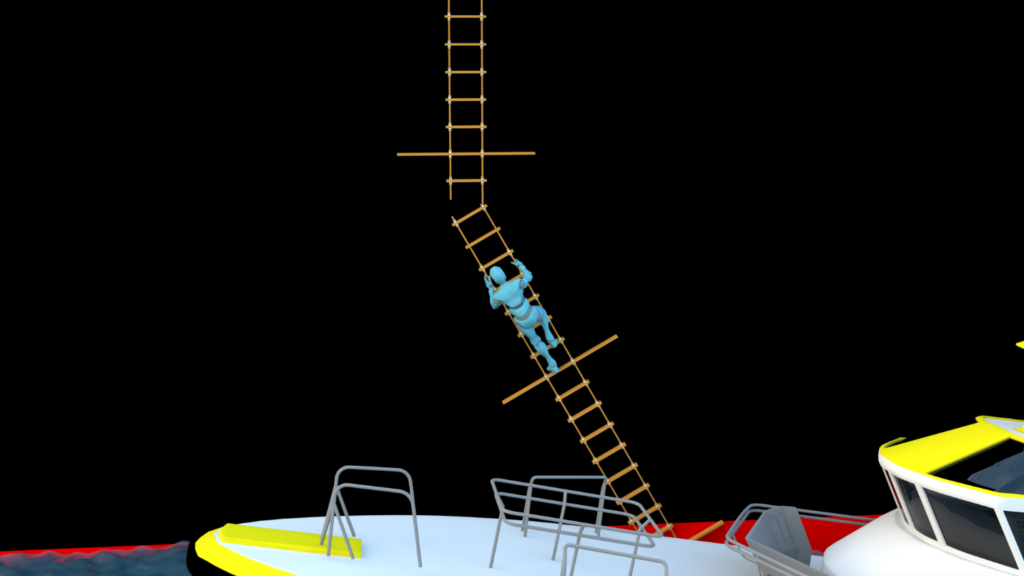
Another reason is that strong wind can cause the ladder to wobble, causing trembling movement on the stairs.
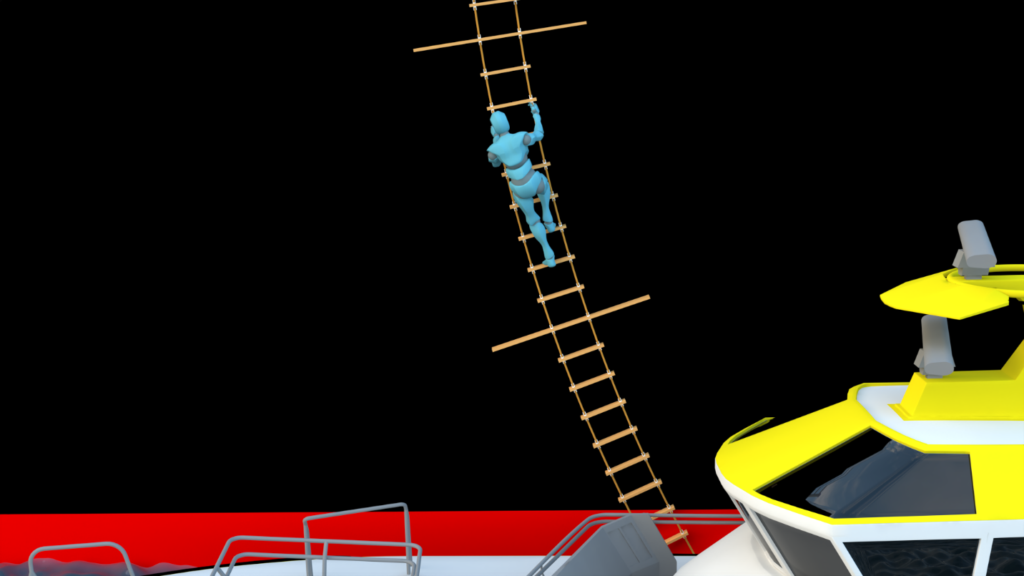
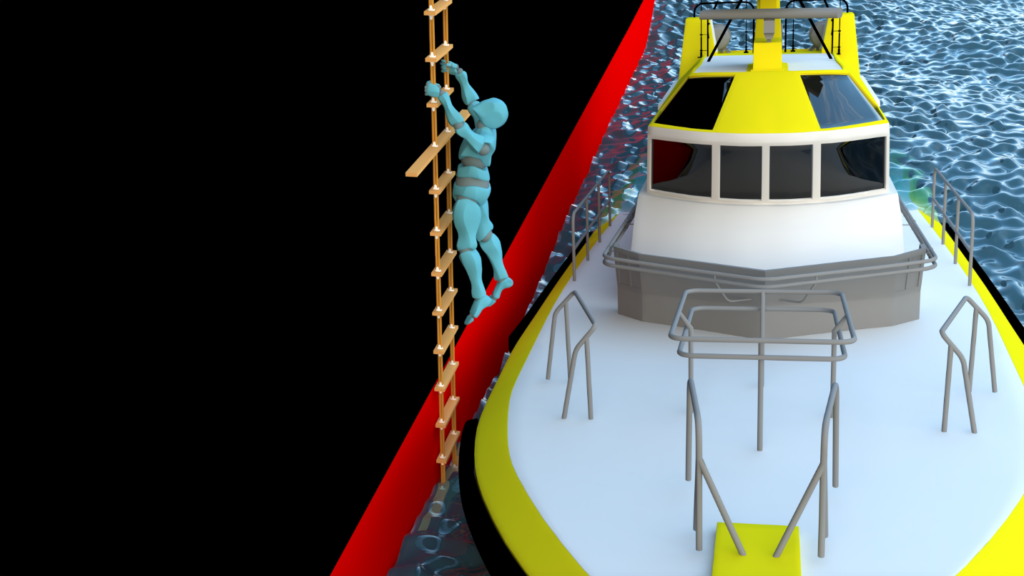
Reason three: When the pilot slides down the ladder, it would be convenient to hold on to something like a side handle, but the lack of such thing causes accidents.
Reason four: Sometimes the marine pilot forgets to put on the safety jacket.
Reason five: The accidents which occurs during at night time are largely due to the lack of sufficient brightness to cover entire boat, this might sound unreasonable, and I will explain it later.
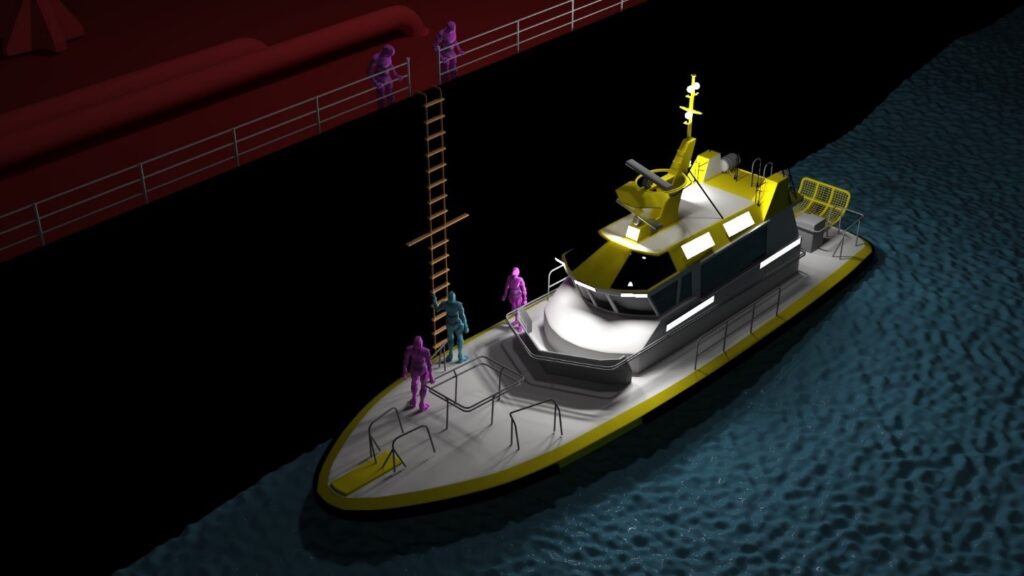
Reason six: As the ship is moving forward, it creates streams of waves on the both side.
If the rescue doesn’t arrive on time the fallen marine pilot might be dragged under the ship towards the propeller.
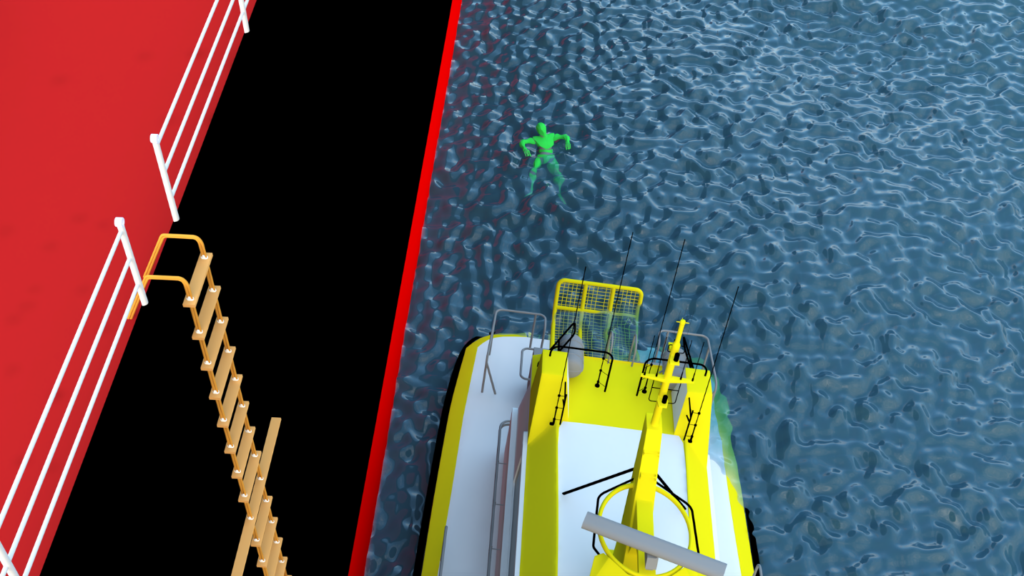
Reason seven: When the boat pilot tries to bring the boat close to the ship, the marine pilot gets caught between the ship and the boat, squeezed by the sheer speed of the force.
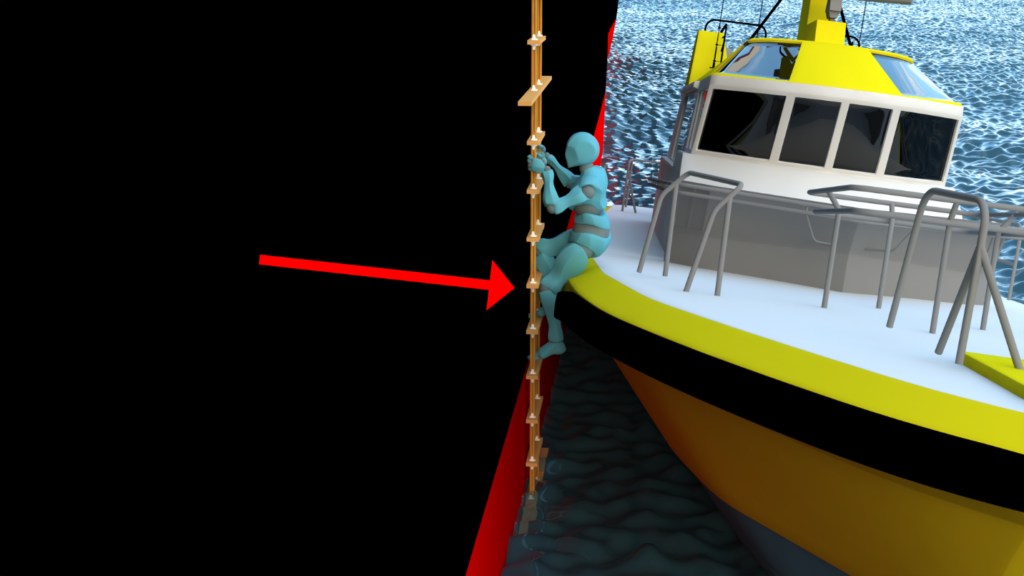
There could be many reasons behind such accidents, I just mention few that I have seen and come across.
The main cause of incidents is violent waves and stormy, windy conditions, but we cannot control or avoid nature, but if we can learn to live with it, to sail through it, there are many possibilities. Basically, such conditions cause the boat to lose its own balance.
The heavier ship can withstand the bad weather conditions, regardless of storms and raging waves, however the lighter boat cannot.
Now that we have identified what’s wrong and what’s causing it, we can start looking for a solution.
What if we could temporarily connect the ship and boat during turbulent sea waves?
What if we could connect the ship and the boat only when the marine pilot is using the rope ladder? Once the connection is made, the marine pilot moves through the rope afterwards, we can disconnect the ship and boat, it may sound unconventional, but it could improve safety and efficiency.
Although my understanding of the subject may be limited, I have had no outside input. Nevertheless, I have formulated an idea that I believe could prove beneficial.
The text does not provide specific dimensions as the size, the length and volume of each ship can vary. However, to aid understanding for engineers, drawings and sketches have been included.
To ensure a safe and efficient boarding process for the marine pilot, it is recommended to first determine the appropriate side of the ship to lower the rope ladder. A durable cable should then be affixed to a vertical line on that side, taking care to protect it from potential salt water damage.
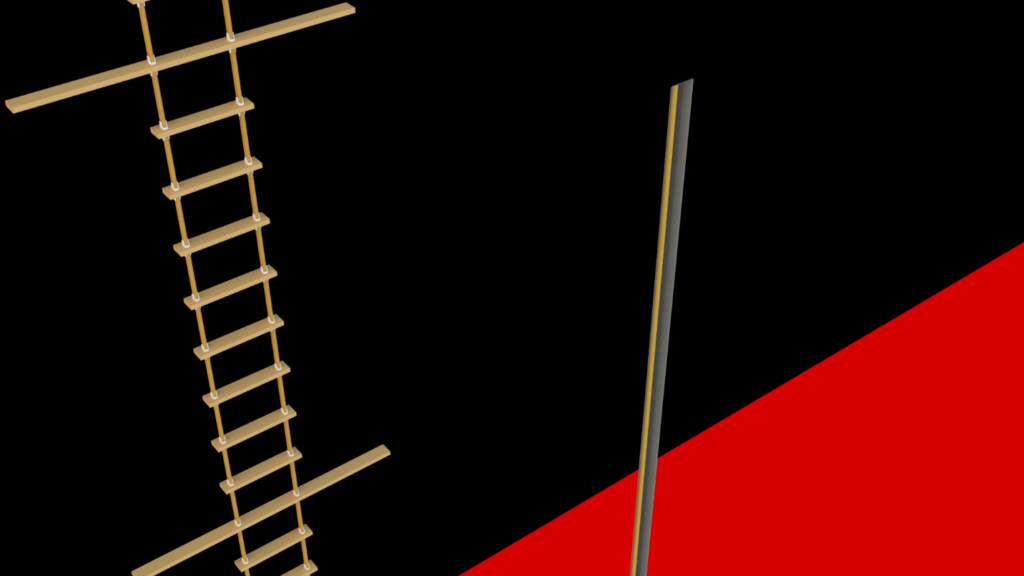
Once it is affixed, it is suggested to consider connecting the vertical rope, which is located on the side of the ship, to an electric motor positioned above the ship floor at one end. The electric motor will facilitate the upward and downward movement of the vertical rope.
One suggestion would be to consider stretching the vertical rope from the mid to just above the bottom of the ship, as this may be more optimal than having it visible.
The length of the vertical rope can be accurately determined by experimenting and observing the movement of the ship in an artificially created strong winds and wave’s stimulator. By noting the extent to which the bottom of the ship approaches the surface of the water, as it moves from left side to right side and vice versa, we can calculate accurate the measurements with precision.
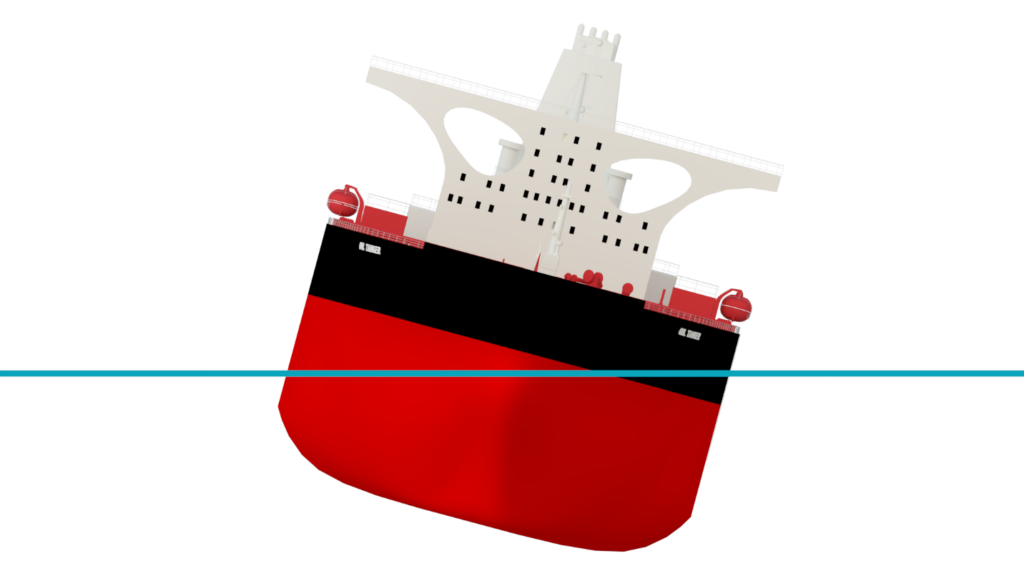
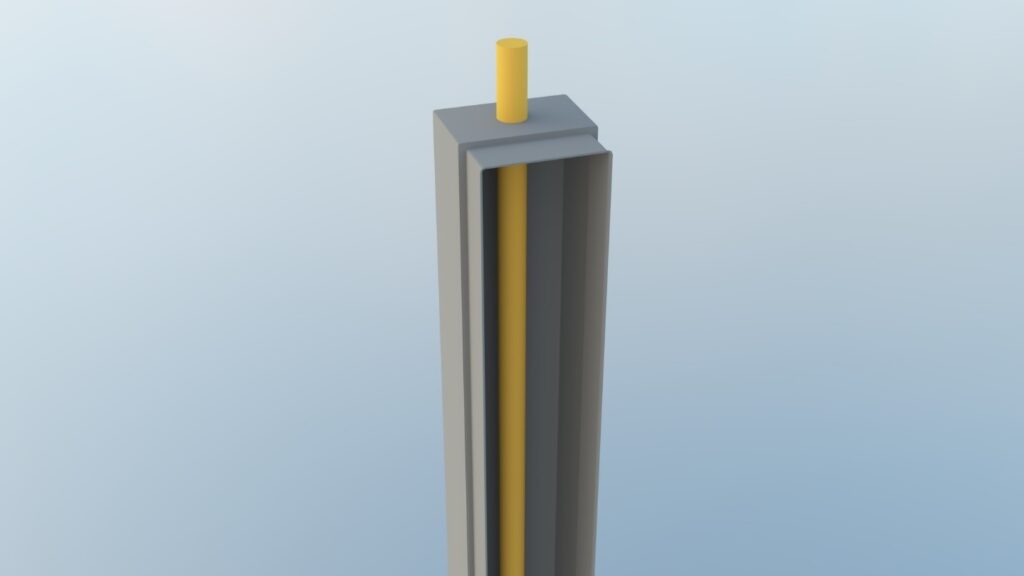
To ensure safety, it is essential that a specially designed grooved pulley clamp is fitted at the point where the rope ladder detaches from the vessel. The rope attached to the pulley clamp should be longer and firmly attached to the surface of the vessel. This will provide a reliable and stable support system for anyone using the ladder, giving them the confidence to climb aboard with ease.
You can operate the wheel either manually or with an electric motor. Make sure that the pulley alignment wheel is fitted with a spring to withstand the vibrations of the ladder in windy weather. Aligning the clamp will cause the wheels on either side to rotate in opposite directions, ensuring maximum fluid movement; if not, the rope will remain still, preventing any unnecessary movement.
The electric motor allows you to easily control the weight on the wheel, plus you can use a pulley clamp spring to securely attach a hook to the safety vest and a rope to expertly manage your movement when climbing the ladder.
After completing all preparations, the captain of the ship should confidently attach the specially designed alley pulley clamp to the carved side of the ship using a rope, ensuring a safe and efficient operation.
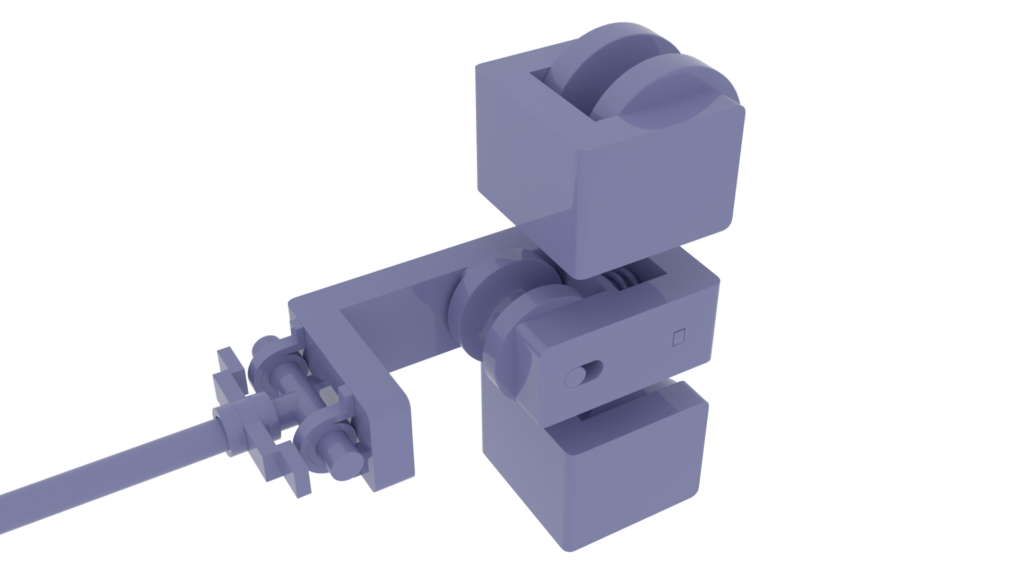
Attach the pulley clamp to the vertical rope, positioning it between the three wheels inside the clamp, and as you pull the vertical rope from the floor of the ship, the clamp will tighten the cable.
Tightening the vertical rope causes the central wheel in the clamp to move, compressing the spring and pushing the cable outwards. This cable can then be used as a hook on the side wall of the ship, ensuring that the boat remains securely in place. By gripping the boat and tightening the rope, you can be confident that it will not move away separately from the ship.
Rest assured that if the cable loosens, the rope will release the hook on the clamp without hitting the side wall, allowing it to detach from the ship. This ensures a smooth risk-free operation.
The captain can confidently loosen the cable from the ship as the crew who want to be on aboard approaches by boat. A skilled marine pilot quickly grabs the rope and expertly attaches it to the pulley clamp on the boat. This tried and tested technique guarantees both safe and efficient boarding and disembarking procedures.
Once the vertical rope is attached to the boat, the ship crew will tighten the cable. The hook from the ship sidewall will then come out, and the boat will be temporarily attached to the ship.
As soon as the vertical rope is securely fastened to the boat, the ship crew will confidently tighten the cable, eagerly preparing for the next step. The hook from the ship side wall will be released, and the boat will be expertly and temporarily secured to the ship.
The crew from above will lower the rope ladder to the boat with the help of a pulley clamp and the marine pilot can safely hook the rope to his life jacket.
The ship and the boat are now securely tethered to each other, and the marine attached with a cable allowing for safe and confident climbing into the ship.
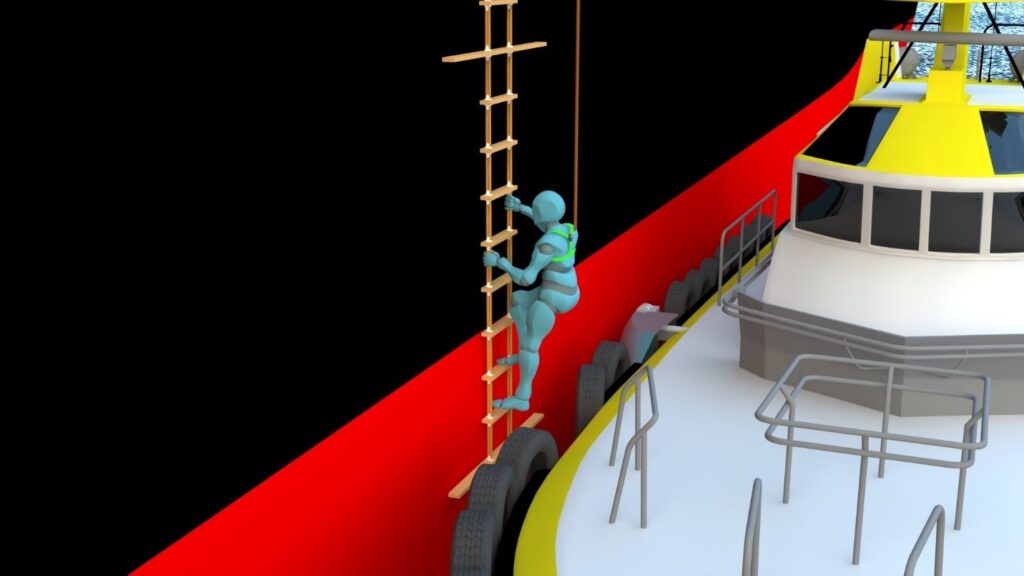
Even in turbulent seas and on wobbly ladders, the marine pilot can be sure of his safety thanks to the secure safety cable, which prevents falls. With this added protection, the pilot can work without fear. The safety cable attached to the marine pilot’s vest is expertly matched to their weight, ensuring that it never interferes his sight. In the unlikely event that the pilot loses his grip and falls from the ladder, the safety cable will prevent him from falling into the sea, instead keeping him suspended at the height to which he has ascended until help arrives in time. The crew from above immediately can pull him from above in order to prevent any potential injuries.
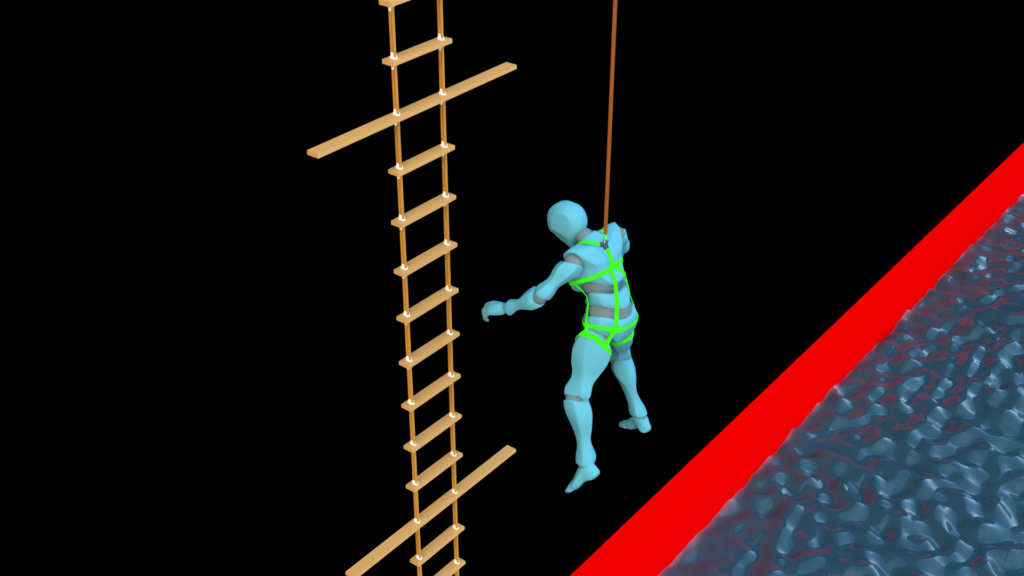
In addition, The boat also adapts to the rocking motion of the ship and it remains securely tied down and adapts to the movement of the ship, even in rough conditions, and will not come loose when the ship is rocking from side to side or up and down.
Once the marine pilot has safely reached the ship, the captain’s crew must release the vertical rope from above to allow the boat to free itself from the ship. This ensures that accidents are completely avoided.
The experiments mentioned here will not take much time: connecting the vertical rope from the ship to the pulley clamp will take only a few minutes, and once the marine pilot climbs aboard, to free the boat, it will take half an hour at most.
Since we are using the electric motor to tighten and loosen the vertical rope, the operation should not take more than five minutes, but we will have to use a trial and error method to determine the exact amount of time and effort required.
This method is not only useful for marine pilots, but also for engineers who need to repair and maintain ship engines in the middle of the ocean. It enables them to safely ascend to the ship.
To ensure maximum protection against sea pirates, it is imperative to install a shield on the area where the ship was carved for vertical cable.
To ensure optimal aerodynamics, it is recommended to attach a shield to the pulley clamps fixed on both sides of the boat. The shield should be placed appropriately so that when the boat is connected to the ship, it can be pressed against the ship to allow for the cable to be connected to the pulley clamp on the boat. This approach will help to maintain the ship’s performance and prevent any reduction in its speed.
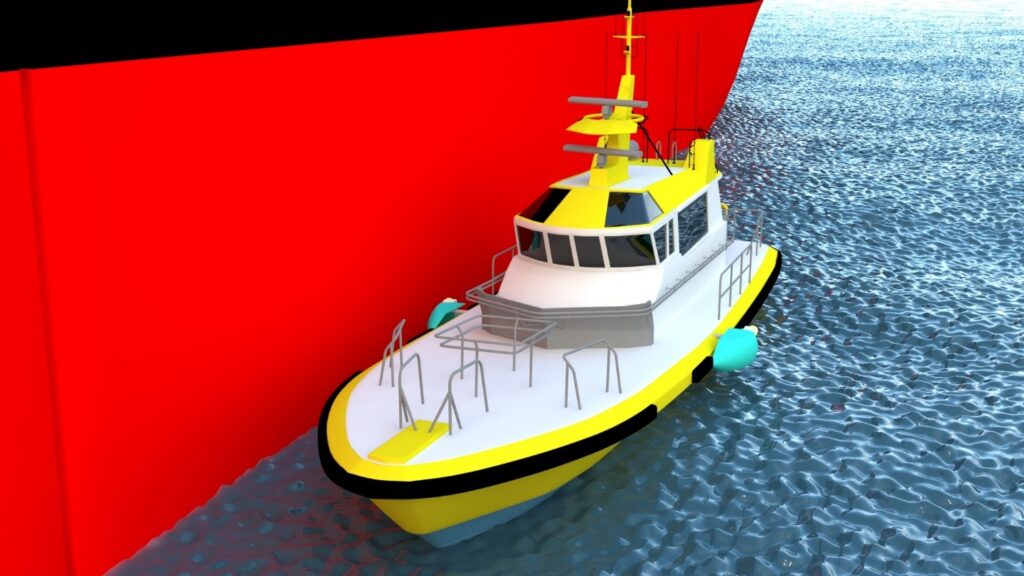
As previously stated, I would like to highlight a few examples regarding night time accidents.
Accidents occur when conditions change without warning, leading to a lack of concentration and poor visibility, resulting in misjudgements and sometimes carelessness. It is important to acknowledge that accidents can happen to anyone, anytime, anywhere.
For example, as children we all had our favourite foods or sweets, but as we grow older, when we eat the same food after many years, our senses recognise something familiar and evoke the same sensation, which our intuition then transforms into vivid images in our mind. This sort of phenomenon demonstrates the power of our senses and their ability to evoke strong memories.
In the same way, when we listen to our favourite song or the most moving song from our childhood, for a second we would feel the same sensations spreading right into our mind, it would feel as if we were experiencing everything all over again in the present time.
When watching television with the family, it is possible to become completely immersed in the programme and not even notice if the rest of the family has fallen asleep. This is a common experience that many people can relate to and come to realise that tomorrow is holiday.

When someone does his work ethically for many years the body starts to develop a muscle memory, the experience he gathered through years helps him to finish his work effortlessly. It gives the mind the unparalleled faith and precise judgement to accomplish the task, however sometimes when the condition changes suddenly it takes time to adapt to new condition and possibilities of misjudgement occurs due to unforeseen situation.
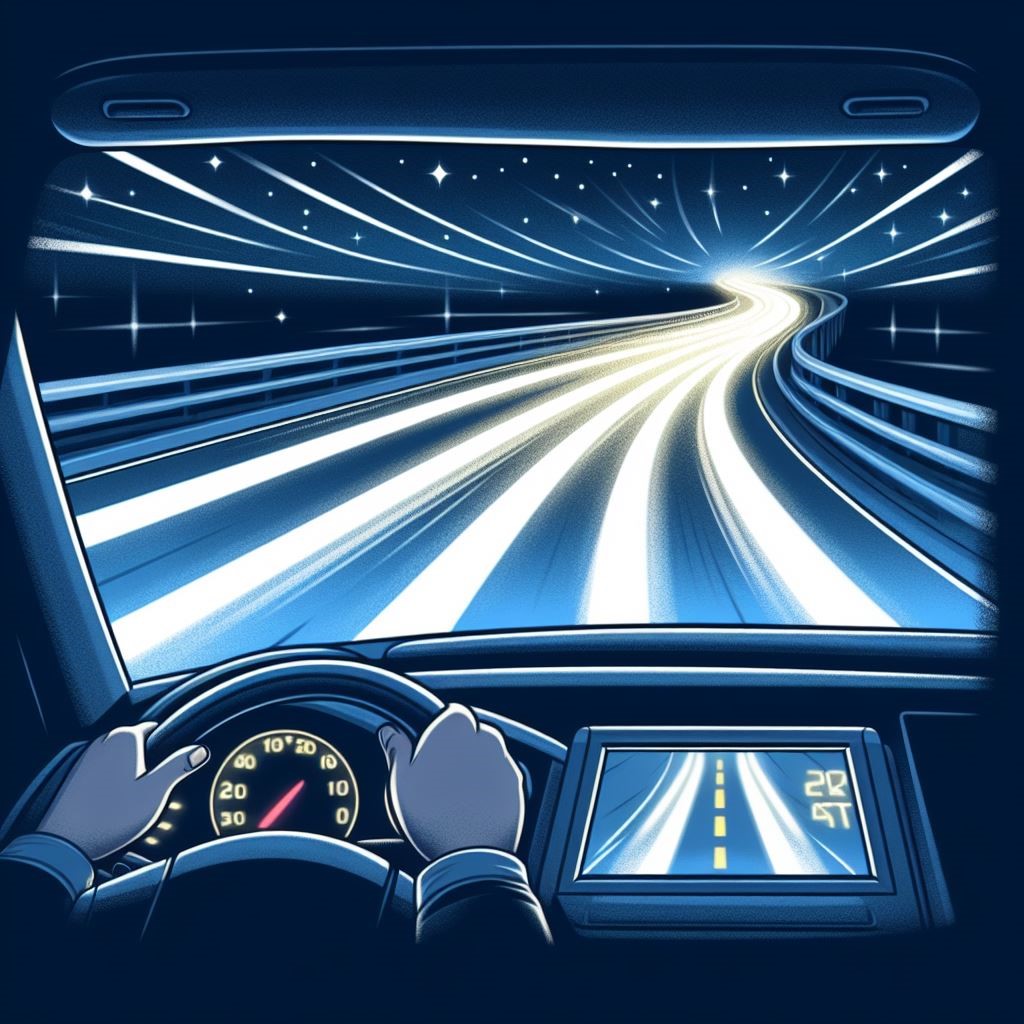
For instance, a driver with many years of experience, travelling on a well-lit motorway at night, may momentarily mistake an oncoming vehicle for a headlamp because of the glaring brightness on the windscreen may look like everything unfolding on the television . It is important to recognise this potential mistake, especially if there is a bend in the road ahead, because it could lead to a serious crash. To prevent potential accidents, it is crucial for drivers to remain vigilant and aware of their surroundings, especially when travelling on well-lit national highways at night.
I am confident that the examples I have provided will be clear and understandable to you. It is important to note that even experienced marine pilots may sometimes overlook elementary safety measures, such as wearing a safety vest. By acknowledging this fact and taking necessary precautions, we can ensure a safer and more efficient work environment.
Distracting brightness can cause misjudgement, which is why it is crucial to remain aware of our surroundings.
It is important to be vigilant and take precautions, as our ancestors advised.
If you have a different perspective, I would be interested in hearing it.